Mortal Company: Co-op Horror
- 4.5
- Rating
- 1.00M
- Installs
- Free
- Price

 Analysis by App-foxy
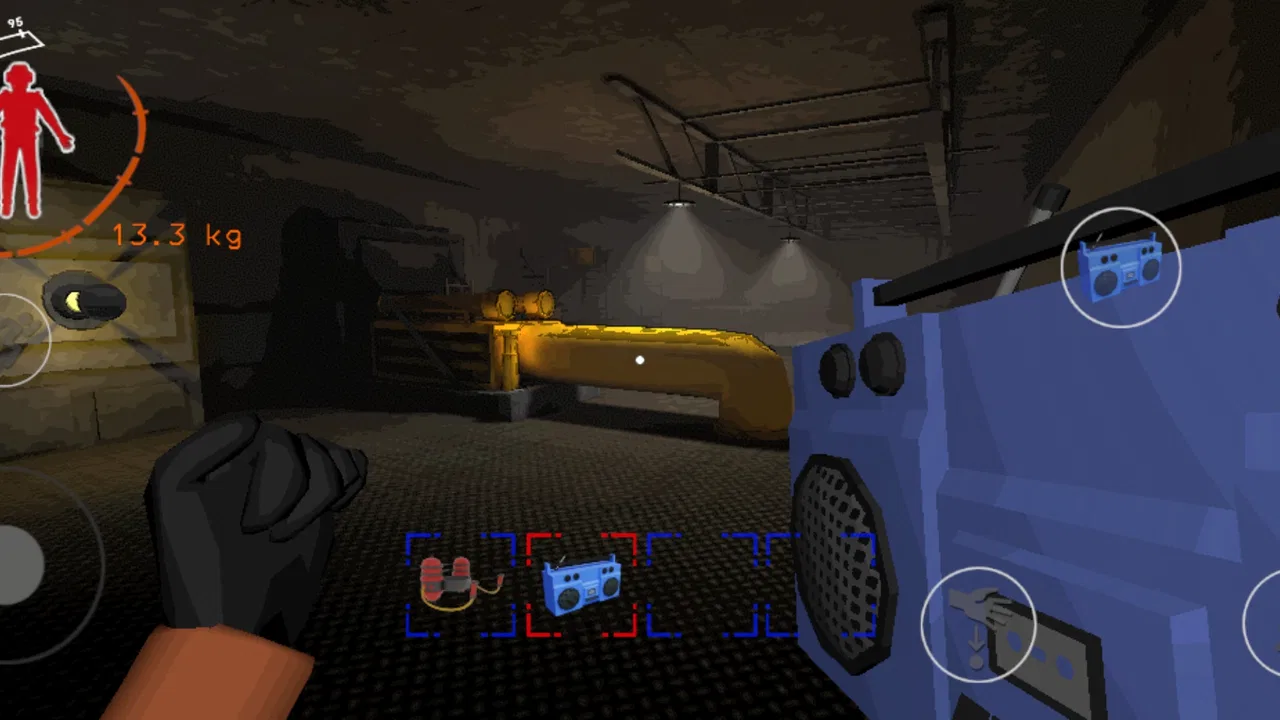
I went into Mortal Company: Co-op Horror expecting a quick multiplayer scare, but its appeal is more specific than that. This is an adventure game built around a group trying to survive dangerous runs, gather scrap, and meet a quota before the situation gets out of control. The important word is “group”: even when the action is simple, the experience depends heavily on communication, timing, and how willing everyone is to accept a little chaos.
Created by AlexKos Dev, the game is free to start and has already passed one million installs, with an average rating of 4.5 from roughly twenty-six thousand ratings. Those figures suggest that the basic idea connects with a sizeable audience, but they do not tell you whether it suits your particular group. In my experience, it works best when everyone joins with a headset, understands that mistakes are part of the entertainment, and wants a tense cooperative session rather than a polished solo adventure.
How the current version feels to play
The central loop is easy to understand. You enter a hazardous location with other players, search for scrap, try to stay alive, and return with enough value to satisfy the quota. That simplicity is useful because nobody needs a long tutorial before contributing. A new player can grasp the immediate objective quickly, while experienced teammates can concentrate on route choices, risk management, and keeping the group together.
You May Also Like

 Blood Strike: 2.5 Anniversary
Blood Strike’s Loadouts Turn Every Drop Into a Tactical Gamble
A close look at Blood Strike’s custom loadouts: how fast access to signature weapons reshapes its battle royale rhythm, rewards preparation, and narrows the gap between fights.

 Pandora - Music & Podcasts
Pandora’s Music Is Easy to Start, but Harder to Recover
Pandora’s strength is its low-effort path from a seed to a station. Its weak spot is how much confidence it asks you to place in connection, setup, and quiet recovery.

 8 Ball Pool
 Is Built on Rivalries, Rematches, and Routine
A close look at the rivalries, rematches, shared routines, and unanswered safety questions that turn a quick pool match into a persistent mobile community.

 Samsung Music
’s Quiet Strength Is Playing What You Already Own
Its reach comes less from spectacle than from dependable access to a personal library. That simplicity is both the app’s strongest retention engine and its ceiling.

 AccuWeather: Weather Radar
AccuWeather Review: A Quick, Clear Forecast for Everyday Decisions
For everyday plans, the best forecast is the one you can understand quickly. AccuWeather makes rain timing, radar, and local conditions easy to act on, with a few trade-offs.

 Hill Climb Racing
Why Hill Climb Racing Still Turns Crashes Into One More Run
A tiny car, a bumpy hill and one more upgrade: Hill Climb Racing keeps resurfacing because its simple chaos makes every near-miss feel personal.
More From Our News Desk
View All News


The horror comes less from complicated systems and more from uncertainty. Every trip creates pressure between collecting a little more and leaving safely. That decision is where the game becomes interesting. A cautious team may finish with modest gains, while an ambitious team can improve its result but expose itself to a much worse ending. I found that the most memorable moments were often caused by one greedy detour rather than by the basic act of picking up scrap.
Although the store summary supports groups of one to six players, the social character changes depending on the party size. With a small team, every person matters and a missing player is immediately noticeable. With a larger group, there is more room for distraction, divided exploration, and accidental confusion. I would not treat the maximum party size as a guarantee that every session becomes better; the game benefits more from players who communicate than from simply filling every available place.
A realistic evening scenario is a short session after work or school. Four friends can agree on a simple plan, enter together, collect what is nearby, and decide whether the current haul justifies another search. If someone wanders off, the rest of the team has to choose between continuing, looking for them, or abandoning the extra loot. That kind of conversation is the real engine of the experience. The game gives the group a problem, but the players create the stories.
Why the quota changes ordinary exploration
In many adventure games, exploration is mainly about seeing what is next. Here, exploration has an economic purpose because scrap is tied to the quota. That makes small decisions feel meaningful. A dark corner is not merely a place to investigate; it is a possible reward balanced against the chance of losing time or safety. I like that the objective keeps wandering from becoming empty sightseeing.
The quota also gives the team a reason to discuss priorities. One player may prefer a safer route, while another argues that the group needs more valuable scrap. Neither approach is automatically correct. The right answer depends on how much has already been collected, how confident the team feels, and whether everyone can still regroup quickly. This makes the game more suitable for cooperative players than for people who want to ignore the party and explore independently.
One useful habit is to define a retreat rule before starting a run. For example, the group can agree that once it has enough scrap, it will stop taking unnecessary risks unless everyone explicitly votes to continue. That small piece of planning prevents the common multiplayer problem where one person keeps pushing forward while the rest are ready to leave. It also turns the quota into a team decision instead of a number that only one player watches.
The value of communication and controlled panic
Voice communication is not just a convenience here. It helps players report discoveries, warn others, and decide whether a separated teammate can safely return. A quiet group can still play, but the tension becomes less manageable because everyone has less information. If you prefer games where you can remain completely independent, this may feel restrictive.
I also noticed that clear callouts are more useful than constant talking. Short messages about a location, a threat, or the decision to leave are easier to follow than a stream of nervous commentary. The best teams create a simple vocabulary and avoid shouting over one another. That is an overlooked skill in cooperative horror: staying calm enough to share useful information while the game is trying to make everyone panic.
Another practical tip is to avoid splitting up without a reason. Separate searches can increase the amount of ground covered, but they also make rescue and regrouping harder. I would only divide the team when the potential reward is worth the communication burden and everyone knows where to meet. For casual groups, staying in pairs is often a better compromise than moving as one large cluster or scattering across the entire area.
What the release and current build tell me
The game was released on December 21, 2023, and the current version is 0.2.2. That version number matters when setting expectations. I see Mortal Company as a developing multiplayer horror experience rather than a finished, feature-complete package that can satisfy every type of player. Its strongest qualities are already visible in the cooperative loop, but a small version number naturally makes me pay attention to consistency, refinement, and how the developer continues shaping the experience.
The early history is relevant because players often judge a cooperative game differently from a single-player title. A solo game can hide rough edges behind a carefully controlled pace. A multiplayer game exposes them immediately: unclear objectives affect the whole party, awkward moments are repeated by every player, and any imbalance in the risk-and-reward loop becomes a group problem. The current build is most attractive to people who enjoy discovering whether a promising idea develops over time.
I would not interpret the version as a promise of specific upcoming features. Instead, I use it as a reason to keep expectations practical. The confirmed identity of the game is already clear: cooperative horror, scrap collection, survival, and quota pressure. What I would watch is how well those foundations continue to support varied sessions. If every run starts feeling identical, the simple loop may lose its pull. If the developer keeps giving teams meaningful decisions, the compact design can remain engaging.
For someone already playing, the current state should feel approachable rather than intimidating. The low entry barrier makes it easy to invite friends who do not normally play horror games, because the objective can be explained in a sentence. Existing players can also create their own challenge by changing how cautiously they approach a run, though that depends on the group being willing to impose discipline rather than simply rushing toward the next scare.
What free entry does and does not mean
The game is free, but it includes in-app purchases ranging from $0.99 to $9.99 per item. That makes trying it with friends straightforward, especially when you are unsure whether the group will enjoy the tone. Still, free entry should not be confused with a completely cost-free experience for every player. Anyone sensitive to optional spending should review purchase prompts carefully and decide in advance whether they want to spend anything.
I appreciate the free starting point because multiplayer games are difficult to recommend when every friend must pay before the first session. Here, a group can test the central loop without making a large commitment. The trade-off is that players who dislike in-app purchases on principle may prefer a paid alternative with a clearer one-time cost. For me, the free entry is a practical advantage, but it is not a reason to ignore the purchase model.
The Teen content rating is another useful part of the decision. This is not a gentle adventure designed for very young children. Parents should consider the horror atmosphere and the social nature of online play before allowing access. Adults and older teenagers who enjoy tense cooperative sessions will be closer to the intended audience, while families looking for a relaxed, all-ages game should choose something else.
Who will enjoy it most
I would recommend Mortal Company to friends who enjoy making plans under pressure, laughing at failed attempts, and treating unexpected disasters as part of the story. It is especially suitable for a regular group that can communicate and return to the game occasionally without needing a long campaign to justify each session. The quota supplies a clear purpose, while the horror setting gives ordinary resource collection an uneasy edge.
It is less suitable for players who want a deep narrative, a carefully paced solo campaign, or a relaxed exploration game. The store description identifies the multiplayer focus, and that focus is central rather than decorative. Even if you play alone, you should not expect the same social tension that makes the group format work. A single-player adventure with scripted storytelling would be a better choice for someone who wants character development and a controlled plot.
It may also frustrate players who dislike repeating a run after a preventable mistake. The game’s appeal depends on risk having consequences, so cautious play is not merely an optional style. If your group becomes angry whenever a teammate takes a bad risk, the horror can turn into an argument. On the other hand, if everyone accepts that failure is part of learning, the same setback can become the funniest moment of the night.
How it compares with familiar alternatives
Compared with a standard adventure game, this one puts more weight on shared decision-making and less on individual progression. You are not simply moving through a story at your own pace; you are negotiating how much danger the whole party should accept. Compared with a traditional horror game, the scrap and quota structure gives the fear a practical purpose. The question is not only “what is frightening?” but also “is the reward worth going back?”
That combination makes it a better fit than a conventional solo horror title for a group that wants conversation and unpredictable mistakes. It is a weaker fit than a narrative-focused alternative for anyone who values atmosphere without interruption. It also differs from a purely competitive multiplayer game because success depends on cooperation, not on defeating the other players. If your friends enjoy blaming one another or pursuing separate objectives, the teamwork requirement may feel like a limitation rather than a strength.
One non-obvious trade-off is that the game’s simplicity can help a mixed-skill group, but it can also reduce long-term motivation for players who need constant unlocks or complex character builds. The straightforward loop gets everyone involved quickly, yet the same accessibility may feel thin to someone looking for extensive customization. I would use it as a social horror game first, not as a replacement for a large progression-heavy adventure.
Practical advice before joining a run
Before the first session, make sure everyone understands the actual win condition. New players may focus on surviving a frightening area and forget that collecting enough scrap is equally important. A quick explanation of the quota prevents the common mistake of treating the mission like free exploration. I would also tell newcomers that leaving with a smaller haul can be the correct decision when the team is already exposed.
Use the beginning of a run to learn how your group behaves. Some players naturally scout, others search for valuable scrap, and some are better at remembering routes. Assigning rigid roles is unnecessary, but noticing these tendencies helps the team communicate more efficiently. A player who remembers the way back can be more valuable than someone who simply moves fastest, especially when the group needs to retreat under pressure.
Keep the first few sessions short enough that failure does not become exhausting. Because the game’s drama comes from repeated risk decisions, a group can learn a lot without playing for hours. If the team finishes a run with a clear lesson—such as “we split too early” or “we should have left after reaching the quota”—the session has still been useful even if the result was poor.
Players using older devices should note that the minimum operating system is Android 6.0 or later. That makes the compatibility requirement relatively accessible, but meeting the operating-system requirement alone does not guarantee that every device will feel equally comfortable during multiplayer play. I would test the game with the intended group before planning a large event, particularly if several friends are joining from different phones.
The current build also deserves a little patience from people accustomed to highly polished mainstream releases. A developing game can have a strong idea without delivering the same level of refinement as a long-established alternative. That is not automatically a deal-breaker, but it changes the purchase decision: you are choosing a cooperative concept with room to evolve, not simply buying a finished horror package.
My recommendation after spending time with it
Mortal Company: Co-op Horror succeeds because it turns a basic scavenging task into a conversation about risk. The quota gives every search a purpose, the horror setting makes retreat feel urgent, and the multiplayer format creates stories that would not happen in the same way alone. I especially like the moments when a team has technically collected enough but still has to resist one tempting final trip.
Its limitations are just as clear. The experience relies on having compatible teammates, and players seeking a deep solo story or elaborate progression may quickly want more. The current version, 0.2.2, also encourages a measured attitude: enjoy the core loop for what it is, but do not assume that a compact cooperative horror game will provide the breadth of a large adventure release.
For a free game, it is easy to justify trying with a few friends, provided everyone is comfortable with the Teen rating and the optional in-app purchases. I would recommend starting with a small, communicative group, agreeing on a retreat rule, and judging the game by the quality of the shared decisions rather than by whether every run ends successfully. If that sounds like your kind of evening, AlexKos Dev’s game is worth a place in your multiplayer rotation. If you want a self-contained story, quiet exploration, or a one-time purchase with no optional spending, I would point you toward a different adventure instead.
What I will watch most closely is not a particular promised feature, but the health of the central loop as the game develops. More variety would matter only if it creates new choices about when to search, when to regroup, and when to leave. For existing players, that is the meaningful test of future progress. The foundation is enjoyable now, and its lasting value will depend on whether each return to the quota feels like a fresh decision rather than a familiar routine.
FAQs for Mortal Company: Co-op Horror
01What is the main objective of Mortal Company: Co-op Horror?
Mortal Company: Co-op Horror is a multiplayer horror game where the main objective is to survive chilling environments and complete missions with your team. Players must work together to solve puzzles, evade terrifying creatures, and escape from haunted locations. The cooperative nature enhances the suspense, making teamwork crucial for survival.
02How does the multiplayer feature work in Mortal Company: Co-op Horror?
In Mortal Company: Co-op Horror, the multiplayer feature allows you to team up with friends or other players online. You can create a lobby or join an existing one, and work collaboratively to face the challenges within the game. Effective communication is key, as players must strategize and support each other to overcome terrifying obstacles.
03What are the system requirements for Mortal Company: Co-op Horror on Android and iOS?
Mortal Company: Co-op Horror requires Android version 8.0 or higher and iOS 12.0 or later. The game is optimized for devices with at least 3GB of RAM to ensure smooth gameplay. A stable internet connection is also necessary for the multiplayer mode to function effectively, ensuring seamless team interactions.
04Are there in-app purchases in Mortal Company: Co-op Horror?
Yes, Mortal Company: Co-op Horror includes in-app purchases. Players can purchase additional skins, weapons, and power-ups to enhance their gaming experience. While these purchases can offer advantages, they are not essential to progress in the game. Players can still enjoy the full horror experience without spending money.
05Is Mortal Company: Co-op Horror suitable for all ages?
Mortal Company: Co-op Horror is rated for mature audiences due to its intense horror themes and frightening elements. The game includes scenes that may be disturbing for younger players, such as jump scares and suspenseful environments. It is recommended for players aged 17 and above to ensure an appropriate gaming experience.
Pros
- Engaging co-op gameplay enhances team strategy.
- Atmospheric horror elements keep players on edge.
- Varied character skills add depth to gameplay.
- Regular updates introduce new challenges and features.
- Immersive sound design heightens the horror experience.
Cons
- Requires stable internet for seamless play.
- Some in-app purchases can be pricey.
- Occasional bugs disrupt game flow.
- Learning curve may frustrate new players.
- Limited solo play options available.

Mortal Company: Co-op Horror
Gallery